OUR MISSION IS TO SPARK INSPIRATION AND REMOVE OBSTACLES, MAKING LEARNING A SECOND LANGUAGE EASY AND FUN.
Our mission at Little Pim is to spark inspiration, remove obstacles and provide encouragement and support to make learning a second language easy and enjoyable for kids.
The Woman Behind Little Pim
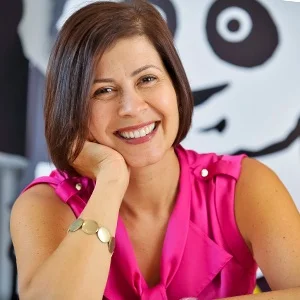
Inspired by her own bilingual childhood, our founder Julia Pimsleur (daughter of Dr. Paul Pimsleur, who created the Pimsleur Method), wanted to give her young son the same opportunity to learn a foreign language.
When she discovered that there were no high quality education materials for teaching toddlers a foreign language, she set out to create them herself. She was uniquely qualified given her background as an award-winning filmmaker, language teacher and mother.
Little Pim - Language Learning for Kids is Born

Pimsleur sought to create a program that would delight and teach young children a foreign language at the same time. Working with leading neuroscientist Dr. April Benasich, educators and native language experts, she spent several years developing the Little Pim language program.
Not only is it the first comprehensive at home program, it can be used effectively by parents even if they don’t speak a foreign language.
The Research-Backed Benefits
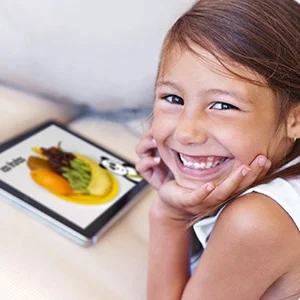
Little Pim’s program supports foreign language learning which multiple studies have shown improves memory and analytic abilities and strengthens problem solving skills.
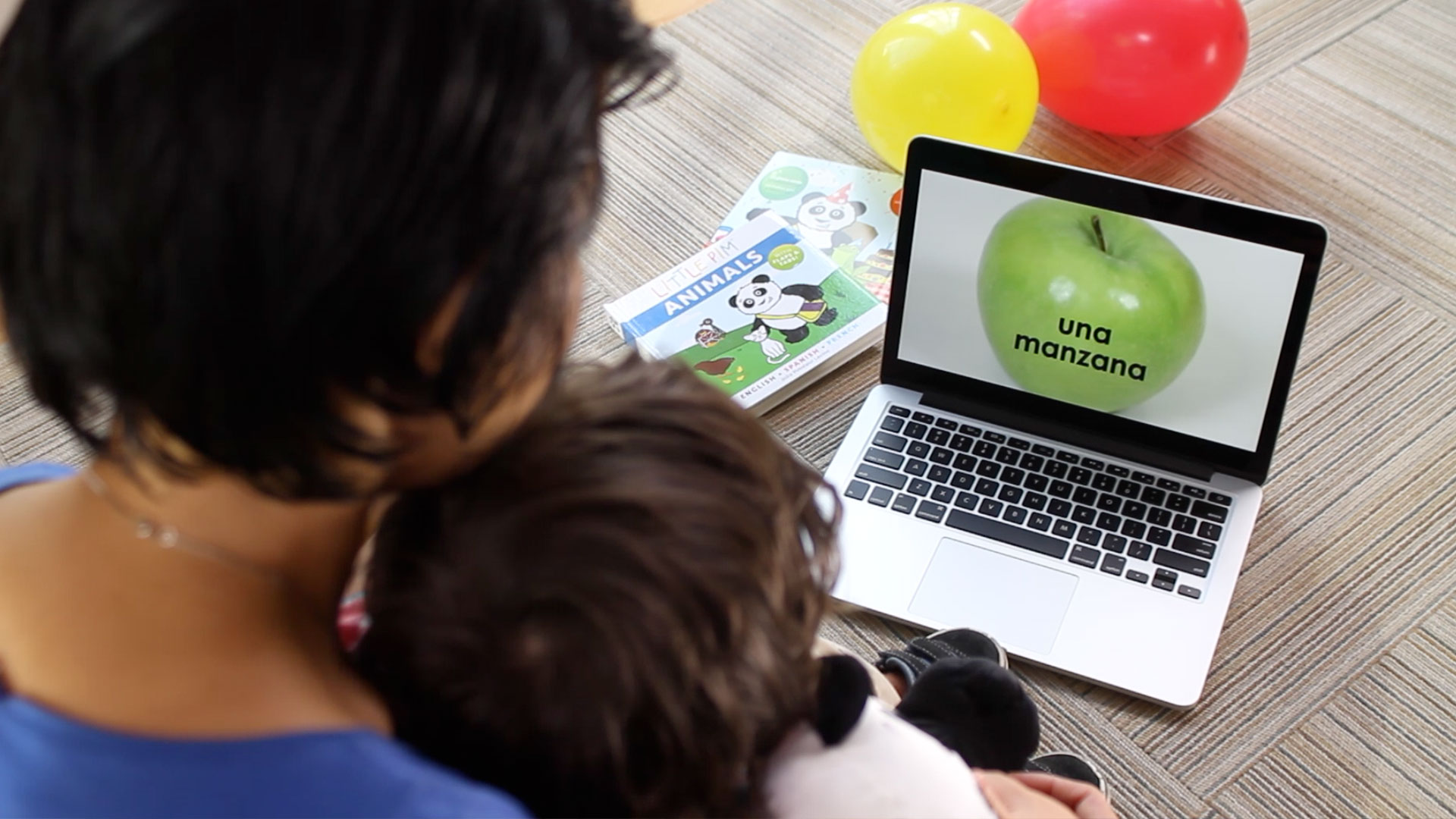
The program helps children acquire a new vocabulary and a near-native accent. Our unique Entertainment Immersion Method® immerses children completely in a foreign language.
Study after study shows that from birth to age six, the human brain is optimally equipped for learning and producing language. Little Pim was specifically created for young children to be able to take full advantage of this window for learning.
Babies hear their mothers’ voices before birth and know the rhythm of their native language as newborns. Once born, babies can understand and discriminate the sounds of every language in the world. Infants detect different sounds and hear the nuances in foreign languages with perfect clarity and precision. The sound elements of language are called phonemes, and repeated studies show that adults perceive phonemes differently than infants.
Young children’s ways of assimilating language are distinctly different from adults, especially in pronunciation. As children become “tuned” to their native language (or languages), they gradually lose the ability to tell the subtle sounds in foreign languages apart. When people are introduced to foreign sounds later in life, they have much more difficulty hearing the differences, thus making it that much harder to imitate these sounds.

Babies gain understanding long before they can speak and benefit from having a rich language environ- ment. That is because babies learn to talk by listening. Research tells us that the more words babies hear, the more quickly they learn to talk. Frequent exposure to words and active social engagement helps the brain pathways that foster language learning to develop more fully.
Children need to hear language in relation to what is happening around them. It must capture the child’s attention, thus the “motherese” - speech with rising and exaggerated contours - is very effective when speaking to one’s baby or toddler. In addition, surrounding children with language materials such as books, objects and pictures for naming help to support language learning. Little Pim’s voice mirrors “motherese” and the series uses sharp and colorful images of objects and actions, allowing young viewers to connect the sounds they hear with actions and objects in real life.
Little Pim makes it easy and fun for parents to take advantage of the best window of opportunity for successful foreign language learning and give them all the cognitive benefits of being multilingual.