Bilingual Panel

Little Pim was proud to co-host a Bilingual Education Panel in New York City in November 2011 with Big City Moms and Kidville, featuring some of the most knowledgeable educators. Watch this 4 minute video to see the highlights.

Enjoy, and let us know if you have any questions of your own.

Julia Pimsleur Levine

CES 2012

This was my second time attending CES (Consumer Electronics Show) in Las Vegas. For the most part, this year’s show felt like “here is what you saw last year, but now all these devices can talk to each other… and they’re slimmer and faster!”  Convergence was a big buzz word this year (figuring out how to let all your electronics talk to each other) as was ecosystem (creating a “tech ecosystem” where all our gadgets live together in harmony). Cameras now have Wifi so you can send your videos to your computer without any cables. Affordable 3D camcorders have arrived, and the fridge that will do your shopping for you is just around the corner.

I also attended the Mommy Tech Summit while at CES, where panelists from companies like Leapfrog, PBS and Disney spoke about everything from the best new apps (check out the award winning Three Little Pigs and Cinderella by Nosy Crow), “gamefying” everything, and how we can be more tech literate parents.

So without further ado, here is the smart, the super cool and the silly of CES 2012.


The Smart


The fridge that shops for you


Take a Jetsons trip into the future with this Fridge (video). Just scan your shopping list with your smart phone and let the fridge tell you when you next run out of hamburgers or Gogurts.

The alarm clock that wakes you up with TV from around the world

A great way to keep up with your foreign language skills at home or on the road. Show your kids French, Italian or Chinese TV on a portable alarm clock! Fully wifi.

The snap-on display that turns your computer into a touch screen

Your kids touch screen happy? Mine are. This is a screen made for schools – so that kids can get up to the screen and touch, drag and tap their way to learning.


The Super Cool


Last year 3D everything was the hot new thing, and this year continues that trend, but with prices dropping there’s a little more stuff we might actually be able to buy!

Kids asking for more 3D? Here is a handy snap-on screen…

This cool accessory slides on to your iPhone screen, and turns your screen 3D without the need for glasses!

Your baby will be even cuter showing off her moves in 3D

3D home video is here, and is getting more and more affordable (you can get a 3D camera for under $500 now!).

The world’s thinnest OLED Smart TV

This 55″ TV is only 4mm thick, and weighs under 17 lbs! It looked awesome, people were just standing around gawkin at it like it was Angelina Jolie.


The Silly


Grill burgers while you answer email

This handy device turns your iPhone into a BBQ sous-chef. The wires plug into the food so that your iPhone will tell you how hot your grill is, and when your food is ready! All while you are answering your email upstairs…

Take your iPhone for a stroll

The iPhone rider

I’m still not entirely sure why this exists, but if you ever wanted to turn your iPhone into a Roomba that doesn’t vacuum, this is for you!

Original tech uses.. the computer dress

This is a dress with it’s own computer display in the fabric. Never again will you have to worry about your iPad clashing with your dress at a formal occasion.


Which one of these do you think is the smartest? The silliest? Leave a comment below and let us know your thoughts!

Little Pim on The View

Gifts from Grandma, with Whoopi Goldberg and Joy Behar!

Easy Ways to Raise Globally Aware Children

We’re excited to have Sara, from Tea Collection guest posting on our blog today. Tea Collection offers globally-inspired designer children’s clothes and gifts. To learn more about Tea and the inspiration for their designs visit their Studio T Blog.

The world is a big place. It’s an even bigger place for a child. One of the best ways to teach your child about a new country is to visit it, and although international travel is a great family experience, it can also be costly and time consuming. There are some simple and affordable ways to teach your children about the world without purchasing plane tickets. We polled our staff at Tea and gathered our top three ways to teach your kids the world without opening your front door.

Tea blog picture

1) Talk about the world.
“Growing up, we didn’t have money for international travel so we had to imagine our foreign trips using an old globe in our living room. My father would spin it and wherever our fingers would stop was where we’d take our “vacation.” We’d then imagine life in these faraway lands- what would we pack for our Middle Eastern trip? Is it cold in Beijing in the winter? What’s the food like in Morocco? To this day, I still can’t help spinning a globe whenever I walk by one to see where I should “vacation” that day.”

2) Cook globally.
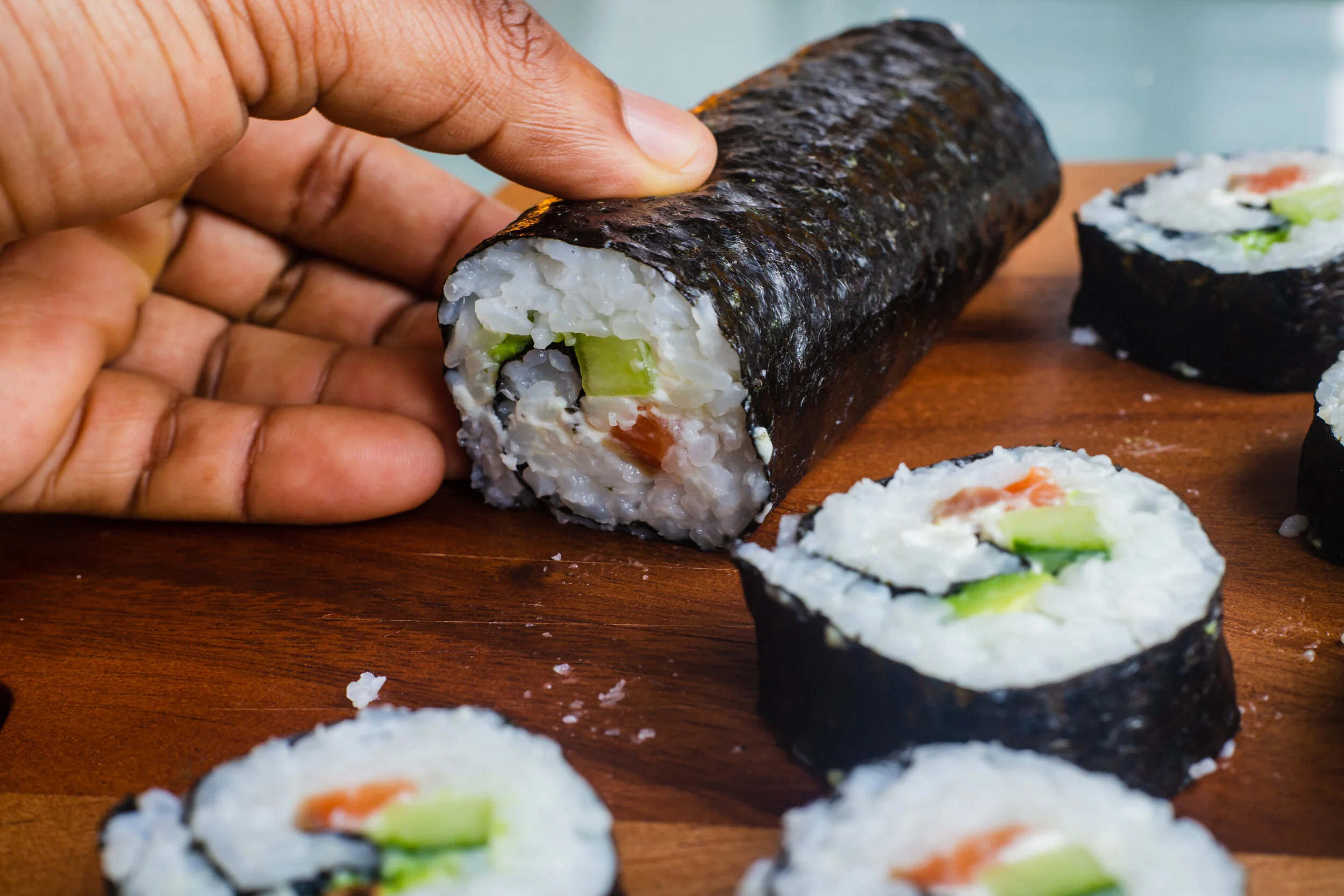
“I was a very picky eater growing up. I knew that when I had kids I wanted them to open themselves up to trying new foods and experiences. So we made preparing dinners a family experience. If we have Mexican food, my kids will prepare the salsa. If I make curry, they’ll help me make pita chips. I have to admit, some nights aren’t a hit and I do have to end up preparing macaroni and cheese. But, it’s worth trying especially for the nights when dinner goes as planned—like when my four-year-old actually rolled and ate her own avocado and cream cheese sushi roll!”

3) Incorporate a new language into everyday life
“I wanted my two boys to learn French but I didn’t know where to start. So, we started with what would be easy: food. We labeled all of the food in the house with their French translation. After weeks of referring to apples as les pommes and milk as lait I was ready to give up and then my 3 year-old asked for fromage with their crackers. Small changes really do make the difference.”

Our Tea staffers prove that bringing the world home is actually pretty easy. How do you teach your kids to be globally inspired? Share your tips below in the comments section.

The best multicultural gifts for young kids – Holiday Gift Guide

It’s time to buy presents! My antennae are up for gifts that are fun, educational, and will help our budding language learners to see themselves as world citizens. Your child is never too young to start playing with toys that feature other countries, languages and cultures. And if your children are already speaking and starting to acquire a second or third language, these toys can help reinforce their wider world view.  Here are a few of my faves for this holiday season. Amuse-toi bien! (have fun)


BABIES (0-14 MONTHS)


Why should your baby just build with blocks when she can create a Spanish city?

Your child will love these brightly colored blocks from Haba (if you don’t fancy Seville, they also have Cordoba!). With 45 pieces, this set will keep your little architect  busy for hours. Brighten up your baby’s nursery and be the only one on the block (pun intended) to have a Spanish city under construction… Buy it here

A teether giraffe with je ne sais quoi

Made in the French Alps with natural rubber and non toxic paint, Sophie has been safely cuddled and chewed by thousands of babies. She is soft light and easy to grasp and fits perfectly into little hands. She makes a happy sound when squeezed… Babies especially love her bumpy head to soothe their teething gums. But if you speak French to her, don’t expect her to talk back, she’ll just look at you in her “coquette” way. Also comes in Vanilla! Buy it here


TODDLERS (15 MO – 3 YEARS OLD)


Learn about Endangered Animals in Asia

Introduce your children to beautifully made wooden toys and to how some of our most endangered species live!  Your kids will discover an Elephant, Tiger and Panda (our favorite, of course) in the “Asia Series” from Plan Toys.  They are made of natural, chemical free recycled bamboo and can sit and stand just like real animals. They are finished with non-toxic dye and recommended for 3+, but could be played with by toddlers as well. Make sure to show your wee ones where China is on the globe! ($34) Buy it here


Make Meal Time a Learning Time!

These adorable plates teach words in French – choose from delightful farm animals or Pirates and Princess themes for your little swarthy crew and precious princess (make that “une princesse”). My son Emmett is 7 ½ and I still haven’t managed to give away his animals plate from this series (little brother Adrian is enjoying it now). Buy it here


PRESCHOOLERS


Children of the World Floor Puzzle

What better way to get familiar with kids of different countries than with this oversized floor puzzle featuring kids from around the world? At only $10.75 it’s a great gift that will keep your child busy and expose him or her to not only to kids’ native costumes as well as the flags associated with the countries where they live. Buy it here


Geo Bingo

From our friends at GeoToys, this bingo game includes 50 country cards, representing the world’s most populous nations. Each card lists that country’s capital, land area, population, and geographic location. The goal of GeoBingo™ World is to get 5 countries in a row on one of the 8 GeoBingo™ Boards. ($18.99) Buy it here


Little Pim Books

Last but not least, what gift guide would be complete without our very own trilingual books? Featuring French, Spanish and English, these board books are perfect for budding linguists and chock full of lift the flaps, pull tabs and Little Pim antics. Books are in English with Spanish and French words taught throughout and phonetics for parents who don’t speak the language. COLORS and FEELINGS, $8.95 each. Buy it here


FOR ADULTS

Growing up Global


This excellent book by Homa Sabet Tavangar has practical suggestions for raising children with a global perspective. I got several ideas from this book of fun things to do with my kids, I am sure you’ll find new cool new activities too! Makes a great gift for parents who are travelers and want to share their love of other cultures and countries with their little ones. Buy it here

7 Steps to Raising a Bilingual Child


This is one of the most practical, well-written books I have found about raising a bilingual child. Dr. Naomi Steiner is a developmental-behavoir pediatrician at Tufts Medical Center in Botson and an expert in the methods used to teach children more than one language. 7 Easy Steps... includes worksheets that help you map out your family’s bilingual action plan, ways to involve parents who don’t speak the language being taught, and tips for keeping your child motivated and excited about language learning. A terrific resource and road map! Buy it here

Hearing Bilingual – the benefits of foreign language learning for young kids

The New York Times published an article entitled: “Hearing Bilingual: How Babies Tell Language Apart.”  The demand for foreign language education programs is growing among parents who realize both the cognitive and social benefits of their children growing up  multilingual.

In a new study, researchers at the University of Washington measured the electrical brain responses of “monolingual” infants (those from homes where one language is was being spoken) against those from bilingual households. The New York Times reported on the results:

“…the researchers found that at 6 months, the monolingual infants could discriminate between phonetic sounds, whether they were uttered in the language they were used to hearing or in another language not spoken in their homes. By 10 to 12 months, however, monolingual babies were no longer detecting sounds in the second language, only in the language they usually heard.”

Over the past decade, Dr Ellen Bialystok, a distinguished research Professor of Psychology at York University in Toronto, has shown that bilingual children develop crucial skills in addition to their double vocabularies, learning different ways to solve logic problems or to handle multitasking, skills that are often considered part of the brain’s so-called executive function.

These higher-level cognitive abilities are localized to the frontal and prefrontal cortex in the brain. “Overwhelmingly, children who are bilingual from early on have precocious development of executive function,” Dr. Bialystok said.

Little Pim allows families, even families who are not bilingual, to do this easily.

Read the entire article: http://www.nytimes.com/2011/10/11/health/views/11klass.html?_r=1&smid=fb-nytimes

Were you exposed to multiple languages as a child? We’d love to hear your stories!

Why Google Translate wouldn’t be possible without Harry Potter

Anyone who’s ever used an online translation tool knows that it’s a rather imperfect art.  Take a given sentence, run it through the translator, and then translate it back to English.  The result will be at best a little garbled, but will usually be pretty much incomprehensible.

Here is what happens, for example, when you run a sentence through Google Translate:

Spanish: Esto es lo que sucede, por ejemplo, cuando se ejecuta una sentencia a través de Traductor Google.

And back to English: This is the case, for example when the statement is executed through Google translator.

Clearly, professional translators don’t have much to worry about.  What is so interesting about Google Translate however, is that unlike other translation tools, it doesn’t actually deal with the meanings of words at all. Google translate doesn’t care about word meanings, syntax, or vocabulary. It turns out that there are only two things that Google Translate really cares about: Harry Potter, and the United Nations.

Rather than try and do any actual translating itself, Google Translate figures that someone else has probably already done the hard work for you.  Google uses its incredible computing power to trawl through the vast swathes of human translation work, and pairs your English sentence with a human-translated equivalent.

Google’s database for doing this is huge. Whenever you ask Google to translate a sentence, it draws on vast archives of translated text, including everything the UN and its agencies have ever done in writing in six official languages.

Essentially Google Translate is only as good as the human translation that has gone before it. It is built upon the millions and millions of human translators who first produced the texts that Google uses as its reference points.

This is why books like Harry Potter are so useful.  With translations in 67 languages, Harry Potter provides an excellent frame of reference for Google Translate to draw upon.  While there may be no recorded history of direct translation between Hebrew and Welsh, by running both translations through the hub of the original English text, Google can attempt a direct translation.

Because Google uses context rather than meaning, this can often result in some rather amusing translations.  As you can see, there’s still a fairly long way to go.


For more fascinating information about translation (and the source of this blog post) check out ‘Is That A Fish In Your Ear: Translation and the Meaning of Everything’ by David Bellos


Little Pim on the Huffington Post

Little Pim was recently mentioned in an article on the Huffington Post about the benefits of introducing young children to a second language.

“Among toddlers as young as 2 years, bilingual youngsters outscored their monolingual counterparts in the area known as “executive functioning.” To toddlers, this comes down to sorting shapes, but for older kids and adults, executive functioning includes important mental tasks such as planning, strategizing, organizing and goal-setting.”


Click here to read the full article.

Little Pim books are here!

Little Pim Books are here! We are very excited to share with you the publication of our first books for young learners of Spanish and French, called FEELINGS and COLORS. The books make delightful companions to our Spanish and French learning system of DVDs, flash cards, CDs and interactive games. They tell colorful simple stories for kids aged one through age four, and are full of pull tabs, lift the flaps, and of course, their favorite panda, Little Pim!

In FEELINGS, Little Pim helps kids learn how to say useful phrases like “I am happy” and “I am scared” and “I am shy” and in COLORS we learn seven colors, through a balloon treasure hunt that ends in a surprise party! The books are written in English, with French and Spanish words and phrases throughout, and as always, we include easy phonetics so that parents can use these even if they don’t speak the language themselves.

I love reading books to my children and never found the right bilingual books that were engaging and interactive. These books will help you bring French and Spanish learning to storytime in a new, super fun way.

Like all Little Pim products, our books are beautifully designed, affordable, and easy to use. Two more books in this series, published by Abrams Publishing, will come out in the Spring, so stay tuned. For languages other than Spanish and French, look out for our e-books, coming soon!

To order the books, click here.


Little Pim Wins a 2011 Tillywig Brain Child Award

We’re so pleased to announce that Little Pim German has won a 2011 Tillywig Brain Child Award!

Brain Child awards are specifically for “exciting products that energize the mind while seamlessly blending fun and learning”. Below are the wonderful things Tillywig had to say about Little Pim:

“It’s been well established that children have a window of time in their early years during which they can easily learn multiple languages. It would be a shame not to take advantage of that golden window, and Little Pim is an early language-learning system designed to do just that. The German Gift Set Plus comes with a boxed set of 60 German word and phrase cards and a boxed 3-pak of German language DVDS introducing over 180 words and phrases, as well as an 8-inch Little Pim Panda plush toy, all packaged in a reusable see-through tote. Little Pim is a cute and peppy panda, appearing throughout the DVDs and on every language card. The live action and animation make the DVDs highly engaging, and each well-illustrated flash card also denotes which DVD teaches that card’s word or phrase in order to help reinforce learning. The DVDs are lots of fun, very child appropriate, and parents enjoy learning from them as much as do children! Little Pim offers products in 10 languages.

Thank you for supporting us and helping bring access to fun foreign language education to children all over the United States (and beyond!).