LITTLE PIM BLOG
15 Essential Tips for Your Next Family Road Trip
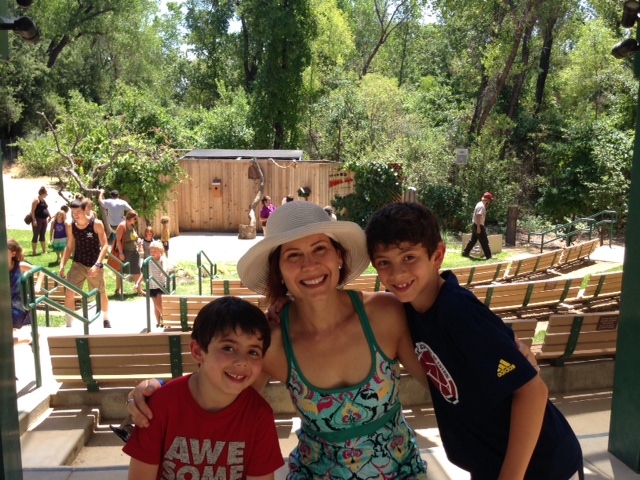
Little Pim Founder and CEO Julia Pimsleur reports on her family's recent road trip. She returned to us with lots of stories and some great tips for busy moms.When we decided to go on a two-week road trip this summer through Oregon, Nevada and California many of our fellow urban parents with kids exclaimed “we have always wanted to do that!” But they still packed their brood off to Maine, grandma’s or sprung for that extra week of summer camp. To our surprise, we are among the first in our circle of friends to actually take a bona fide road trip. Our findings seemed blog-worthy and a great way to honor this amazing country and Independence month to boot! Both my husband and I have fond memories of summer car trips we took with our parents, and while this very American tradition may be going the way of the dial phone, if records can make a come back, why not road trips? We decided to find out whether 11 days of two adults, two boys (6 and 9), 1250 miles and imposing on far flung family and friends in three different states would make for a great time or a failed attempt at old fashioned fun, like trying to bring back square dancing. Happily, it was a huge success!
The trip included breath-taking views as we wound along Highway 101 on the Oregon coast, which really can’t be captured with any camera or smartphone. We only drove a few hours a day (maximum 4, and never more than 2 at a time) and had a great time in the car comparing hamburgers at our various stops, counting red cars, and playing French music. We did have rain the first couple days and we did have moments of total meltdown (the main one on a nature walk that did not get sufficient up front buy-in). In less than two weeks we saw three states, visited cousins in two states, ate in countless charming roadside restaurants, explored great zoos and aquariums, tasted local peaches and watermelon, heard our kids exclaim in delight over bugs they had never seen, took walks on bridges made by famous architects, and created opportunities for our third grader to show off his Native American history knowledge. As a side benefit, now we can all name which states are part of the Lewis and Clark trail! Can you?
Here is my list of Do’s and Don’ts for when you plan your own road trip. There is something deeply satisfying about moving your family unit through America and reconnecting with how vast and grand this country is. It is also a way of slowing down time and enjoying time together far from tech and TV. These tips are most pertinent if you have kids in the 5-11 age range – we figure we are in that short window when they will actually WANT to do this kind of trip with us. I also think setting yourself up for success means having at least one real driver in the family who thinks it will be fun to take on the lion’s share of driving.
DO:
- Set up hotels and an intinerary a few weeks in advance. Book at least half your hotels up front so you have some anchors. Ask friends you haven’t spoken to in years where to go in their areas, you’ll find people are excited to help!
- When planning the trip look for friends and family who have kids roughly your kids ages. And an extra bedroom. Lacking either will be sub optimal.
- Stay at the nicest hotels you can and alternate with camping or cabins if you want t go more natural. (Shout out to my husband for agreeing to stay at “Marriott Town Suites” with eat-in kitchens and outdoor pools in lieu of the camping he requested.)
- Let each child have his or her own iPod. Major sanity preserver and they can still hear you and look out the window.
- Make a “Summer Road Trip” song playlist in advance with music everyone in the family likes (this takes some advance research). Let your kids make their own playlists too; they will love that.
- Spend two nights in one place when you start feeling like if you have to rummage through your bag one more time to find your toiletries you might scream.
- Map out the trip but don’t overplan. One of our favorite places was in a town we had no intention of going to (Redding) that was recommended by our hotel receptionist.
- Have strict rules about "tech time" on smartphones or tablets (ours got 30 min a day in the car and listening to music on iPods did not count).
- Start traditions! Every few days at a dinner we went around the table and each said 3 things we are grateful for. It’s a great way to get kids to reflect on the generosity of friends hosting us. And sometimes they even thanked us for planning this trip!
- Use the road trip to learn new facts about America. We became Lewis and Clark Expedition experts.
- Have a designated bag you bring with you to restaurants with entertainment for the kids. They color in those placemats way too fast and service is not always speedy. Inside the bag – coloring pad, markers, lego guys, Lewis and Clark kids book, stuff like that. Keep it in the back seat for easy grab and go.
DON’T:
- Be too attached to the plan. But do have one.
- Let your kids ask servers for things directly. Trust me on this one.
- Settle for bad coffee.
- Tell your kids more than once a day “look out the window, this is so beautiful!” You didn’t care about that when you were a kid, and chances are, they don’t either!
Kids Cook! Frozen Delights for Summer: Mexican Paletas

Looking for ways to beat the heat this summer? Turn your freezer into a private popsicle stand – it’s a chilly, fun, tasty way to beat the summer heat. Oh, and did we mention economical, too?
Ice pops are popular around the world, especially in Mexico where paletas, ice pops made from unusual tropical flavors (think tamarind, mango lime, or watermelon and cucumber) are a super refreshing way to cool off on the tropical beaches. On the creamy side, there’s even arroz con leche (rice pudding) paletas, Mexican chocolate (cinnamon flavored), and avocado frozen treats as well.
Authentic Mexican paletas often combine a bit a savory, or even spicy, flavors together – pineapple and jalapeno or mango and chile, ice pops are even dipped in savory spices – we’ve decided to go with a sweeter version here though.
To make Paletas at home, think about whether you prefer an agua (water) based pop or one made with leche (milk) for a creamier treat.
Then the sky’s the limit as far as flavors – if you have lots of berries on hand, puree them in the blender or food processor. Then pour through a fine sieve to discard seeds. Add sugar (about 1 tbsp per ½ cup of fruit). Mix with milk, yogurt, juice, or water – then freeze.
To freeze paletas, you don’t need fancy equipment. Have a Dixie cup and a popsicle stick? You’re in business! Plastic ice pop trays can be picked up at the supermarket, dollar store, or even drugstores.
The trick, especially with small children, is patience – paletas, and all ice pops, need time to freeze. But if you start these in the morning, they should be ready after dinner. Or make the night before for the next afternoon.
For a fun summer activity, try setting up a paletas bar with a variety of juices, yogurt, plus assorted chopped up fruit and let the kids play ice chef!
We created two easy, tasty, fresh, and relatively healthy paletas combos below.
But use your imagination – Enjoy!
Orange and Blackberry Paletas
- * 1 cup Orange juice
- * ½ cup Pomegranate juice
- * ½ cup Blackberries
Pour a layer of orange juice into pop mold. Freeze until firm.
Mash blackberries and combine with pomegranate juice (strain through a fine colander if mixture is too thick).
Fill molds rest of way with pom/blackberry combo
Freeze until hard.
Strawberry Lemonade
- * Store bought lemonade
- * Squeeze of lime juice
- * Fresh strawberries
Mince or thinly slice strawberries. Combine with lemonade and lime juice.
Freeze in pop molds.
Bonus Recipes
Mexican Chocolate Fudgicles: prepare instant chocolate pudding mix. Add ½ tsp of cinnamon and dash of vanilla. Pour into molds. Freeze.
Watermelon Paletas: Puree watermelon in the blender, add a squeeze of lime. Combine with a simple syrup (equal parts sugar and water, boiled, then cooled) to get desired consistency and sweetness (you may find you prefer the pops sugarless). Freeze.
Love these Mexican –influenced ice pops? Discover more Spanish language fun with our Spanish Discovery Set, here.
Color Your July 4th with Fun!
Here at Little Pim, another holiday means another coloring sheet! In preparation for your July 4th road trips and traffic jams, print out a bunch of these festive sheets to keep the kiddos occupied. And if you need some additional reinforcements, take advantage of our pre-July 4th sale and get 30% off your order with code USA. Voilà! Click on here to print your free coloring page!
Free Brazilian Samba Beats for Little Feet

Little Pim is celebrating the rhythms of the FIFA World Cup 2014 in Brazil with a FREE kid-friendly compilation of Samba-influenced tunes. So get ready for a dance party Brazilian style!
Brazilian music has a get-up-and-dance beat that kids love, with rhythms that make it hard to sit still. The most famous Brazil sound is the Samba, a mix of Afro-Jazz influences. Kids are drawn to it for the multiple percussion instruments --- such as drums, whistles, and bells (very fun to play along with--DO try this at home!) -- featured in the songs.
Your children may recognize some of the Portuguese lyrics and Brazilian beats from their Little Pim language lessons and the fun animated movies Rio and Rio2. We’ve delved a little deeper into the music of the “Samba Nation” and created a get-up-and-dance music compilation. Just click on the link below and then turn-it-up for family-friendly Samba and Brazilian beats -- plus a special FIFA World Cup 2014 song by Shakira. We dare you stay in your seats!
World Cup 2014 Soccer Crafts for Kids (Perfect for Father’s Day!)
Does your family love soccer? Have they caught World Cup 2014 (currently being played in Portuguese speaking Brazil) fever yet? Are you all itching to find a way to show your love of the most popular game in the world? If you answered yes to any of the above, we have great news for you: we’ve found fabulous, fun soccer crafts (or as they would be called in most of the world, “football crafts”) for kids, fun to make and also perfect for Father’s Day giving.
We think they’ll score a goal with your whole family!
Soccer Field Mouse Pad

Supplies: Green craft foam square (you can also use green craft paper and glue it to Styrofoam or carboard), white paint markers, white crayon, or white acrylic paint and a small brush
- Cut green construction foam into a rectangle, approximately 6” x 8”
- Using a pencil, sketch the outline of a soccer pitch on the foam: circle in middle, rectangles for goals, line across the center. Hint: We used a small glass and our mobile phones to trace the shapes in pencil before we started coloring in.
- Then using whatever white art supplies you've chosen, fill in the lines on the field.
Goal!
Check out these links for other great Soccer Projects for Father’s Day and beyond. Feliz dia dos pais!
Kick Off World Cup 2014 With Fun Portuguese for Kids

The biggest sporting event in the world, The World Cup of soccer (or football as it’s referred to in most countries) is about to kick off in the South American country of Brazil! To help you get ready for this month-long international sports tournament, we’ve rounded up a helpful list of Portuguese futebol (soccer) terms and a fun word search so you can say Let’s play soccer! Vamos jogar futebol!
Portuguese For World Cup 2014
soccer = futebol
the ball = a bola
to kick = chute
to run = corre
to catch = pege
to throw = joge
head = cabeça
hand = mão
foot = pé
He is kicking = Ele está chutando
He is kicking the ball = Ele está chutando a bola
He is running = Ele está correndo
He is throwing the ball = Ele está jogando a bola
He is catching the ball = Ele está pegando a bola
Click image to download our free World Cup 2014 word search!

Kids Cook: Gooooaaaal! Brazilian Treats For the World Cup
The World Cup 2014 is just around the corner – it starts June 12 – and is being held in host country Brazil. Here at Little Pim, we’re excited to share our love of both the Portuguese language and Brazilian culture with our friends. To get you ready for some world class World Cup watching, we have two easy Brazilian recipes – one savory and one sweet – great for small hands to help create.
Vamos comer! (Let’s eat!)
Savory Treat: Pão de Queijo (cheese puffs)

These savory cheese puffs are crisp on the outside, rich and chewy on the inside. They’re a popular treat in Brazil for an afternoon snack or pre-meal nibble –although we think they’re also perfect for watching Futebol (soccer)!
INGREDIENTS
- 1 cup tapioca starch
- 1 cup finely grated Parmesan cheese
- ½ cup plus 2 tbsp. flour
- 1 tsp. kosher salt
- ½ tsp. active dry yeast
- ¾ cup milk
- 4 tbsp. unsalted butter, cubed
- 2 eggs
INSTRUCTIONS
- Heat oven to 350°.
- In a large bowl, whisk together tapioca starch, Parmesan, flour, salt, and yeast. Heat milk and butter in a small saucepan over medium-high heat until butter melts. Pour mixture into dry ingredients along with 1 egg and stir until dough forms; cover and let sit for 30 minutes.
Kids cook:
- Using a tablespoon, portion out dough and roll each into a ball. Place on parchment paper-lined baking sheets, spaced 2" apart; beat remaining egg in a small bowl and brush balls with egg.
- Bake until browned, 25 to 30 minutes.
Makes 16
Sweet Treat: Brigadeiros (Chocolate fudge balls)

These fudgy truffles are a favorite dessert throughout Brazil. We say “Gooooaaallll” for the easy recipe and yummy sprinkles on top.
INGREDIENTS
- 4 tbsp. unsalted butter
- 2 tbsp. heavy cream
- 2 (14 oz.) cans sweetened condensed milk
- 3 oz. semisweet chocolate, finely chopped
- 1 tbsp. unsweetened cocoa powder, sifted
- 1 cup chocolate sprinkles
INSTRUCTIONS
- Bring butter, cream, and milk to a boil in a 4-qt. saucepan over medium heat.
- Add chocolate and cocoa powder, and reduce heat to low; cook, stirring constantly, until mixture is the consistency of dense, fudgy batter, about 16 minutes.
- Transfer to a bowl; let cool. Chill until set, at least 4 hours.
Kids Cook:
- Using a tablespoon, portion out fudge and roll into balls. Roll each ball in chocolate sprinkles until evenly coated.
- Chill until ready to serve.
Makes 2 dozen
All recipes courtesy of our friends at Saveur.
5 Sanity Saving Family Road Trip Tricks and Tips

Heading out of town for a sunny family road trip? You’re not alone; car travel is the most popular way for families to travel during the summer months. But it doesn’t mean it always easy.
Never fear, our family travel expert Melissa Klurman is here with tips and tricks to make your family road trip as smooth as your favorite roadside frozen custard.
Let’s hit the road!
1. Snack attack!
Nothing makes a trip fly by like special snacks. Make a road trip bento box for each child in your car using a plastic tackle box from the craft store – fill compartments with kid finger food faves such as goldfish, grapes, string cheese, and fruit snacks. Don’t forget water bottles and juice boxes to quench your thirsty back seat crew.
2. Art supplies on the fly
One of my favorite tips from my early travel writer days was to make a portable desk from a small plastic storage container – fill it with washable crayons and markers, stickers, and paper, then use the top as a “desk”. When I’m feeling lazy, I make do with a shoebox. Best part? Everything goes back in the box for easy craft cleanup.
3. Car games
My family plays endless (and I mean endless) rounds of “I Spy” and “20 Questions” both in the car and any time we stop for a meal break. To keep my sanity, I also stock up on magnetic travel games such as Travel Bingo to switch things up. Another great option for car and restaurant fun is Flashcard Speed Rounds (we flash a card and see who can get the answer first) – perfect for Little Pim’s 11 different language flashcard options (check out Spanish, here).
4. Cozy corners
One of the highlights of traveling by car with kids is being able to let them snuggle up with their favorite pillow and stuffed animals from home. Don't miss this opportunity for quiet car time -- turn the back seat into a nap friendly spot with fluffy toys, blankets, and pillows your kids love.
5. Electronic Back Up
Although we always try to stay unplugged for as long as possible to enjoy the scenery, for extended car trips, it’s often a relief for everyone to have a variety of entertainment options available. Preload your tablet or phone with kids friendly music, video, and game and app options so they're ready when you want them. And don’t forget to pack over–ear headphones if you need them for quiet viewing.
Buon Voyaggio!! Have a great trip!
Kid Culture Around the World: What’s New in Paris

Kids often wonder what children like them are doing around the world. So at Little Pim we’ve decided to help open a window to cultures both near and far for our little learners, allowing them to get a peak at their international counterparts while learning a bit more of their favorite language. First up: Paris, France.
Our blog team member Melissa Klurman is just back from Paris, the City of Light, and here’s what she spotted les enfants (children) doing there:
Eating Sunday lunch (Manger le dejeuner du dimanche)

Family time is très (very) important to French families.
Even when they’ve had a busy week, they schedule time for a long leisurely lunch en familie (with their family), usually at a bistro (a casual restaurant).
As you can see here, the reward for sitting patiently through frites and croque monsier (the French version of fries and grilled cheese)? Dessert!
Playing Dress Up (se déguiser)

What's more fun than dressing up at home? Doing it in a real castle! These costumes are ones you can borrow at the Chateau de Vaux le Vicomte outside of Paris. Kids can wear their fancy dress to visit all the rooms in the chateau and then learn to play games from the olden days (really old, we're talking 1600s) out in the beautiful gardens.
Swimming in the Pool (Nager dans la piscine)

As summer approaches, all thoughts turn to la piscine (the pool!).
Since French weather can stay a bit cool until August, indoor pools (such as this one at the Shangri La Hotel) often fill in for the outdoor version.
Playing games (Jouer des jeux)

Just like kids everywhere, French enfants love to play outside, biking, running, and playing games. Something new to catch their attention are life-size game boards that line the Seine River in Paris like this giant maze.
Ancient Greece Meets Modern Pimsleur

Little Pim founder and CEO Julia Pimsleur writes home from Greece. As my plane landed in Athens for the Global Leadership conference hosted by the Entrepreneurs' Organization, I was thinking my father must have looked out this same kind of window 50 years ago. That is when my parents came to Athens to put to the test my father's home grown method for teaching adults with no prior foreign language experience to speak a new language. Today this would be called seeking "proof of concept" in the start-up world. Back then I am sure my father thought of it simply as seeking an answer that would make or break his future. He had a vision of creating a National Bank of Languages where anyone could learn a language in a short time for purposes of travel for business, government service abroad or for personal pleasure. In the wake of Sputnik, the United States was taking another look at why Americans were behind in the world in a number of areas, including foreign language acquisition, and they thought my dad, known as Dr. Pimsleur, was the right guy for the job.
Armed with a modest grant from the U.S. Government Department of Health, Education and Welfare, my parents left for Greece to prove that with the right method, anyone could learn to speak a foreign language, even a difficult one like Greek. Though this was a clearly entrepreneurial endeavor, Dr. Pimsleur surely thought of himself more as an academic on a mission. His challenge in Greece was simple and yet incredibly hard: get people to speak conversational simple Greek in a few weeks. In those pre- app, pre-software pre-online learning days, this had never been done. If you wanted to learn a language you had to take a course either at a private institution or university and slog through hours of grammar lessons, repetition and often not getting around to conversation for months.
My father wanted to offer an alternative way of learning that would change the field forever. To prove his method worked, my father (with a lot of help form my mother) recruited 27 Americans and Brits who lived in Greece and wanted to learn Greek. They put an ad in the local English language newspaper offering a free experimental program in Greek. A mix of people turned up - students, military wives, an English teacher and some ex pats who claimed they had tried all means but could not master the language.They ran the program for three months and out of the original number only 2 dropped out.

In order to write the program, my dad, with help from the students in the program, tried to target the most useful utterances that one needed to know arriving in a foreign country. The idea was that you should be able to start conversing from the very first lesson. These interactive dialogues were recorded on a reel to reel tape recorder, with my father relying on his "native speaker", a Greek teacher, who provided him with the Greek language. My dad was the "Teacher on the Tape" (which later became the Pimsleur Method's first tag line!). The participants repeated these words and phrases into a Wollensak tape recorder in 20-30 minute sessions every day. My mother's job was to run the lab in a small un-air conditioned room in a downtown Athens, listen to the recordings and mark the places where students were unable to respond correctly. This was done on lined yellow legal pads which quickly piled up in stacks around their apartment. At night they went over the responses of the lesson of the day to see what parts of the program had to be tweaked-a tedious and work intense endeavor. The next day my dad rewrote what was necessary to insure that students could respond correctly to 80% of every lesson, and those lessons were re-recorded.
That became the basis of the "gradual interval recall method" otherwise known as the secret sauce of the Pimsleur method. They also conferred with the students who helped them understand their language needs. My parents used their own experiences as visitors to a foreign country to help decide what was the most useful and practical vocabulary to include in the programs. And then their adults started doing something amazing that kids do so naturally but adults often find nearly paralyzing in a new language: they spoke! They got comfortable and conversational even faster even than my father hoped. My mom remembers that when whey packed up shop, the students gave them a big party, wishing them luck and encouraging them to quickly go do the same for other languages!
So they went back to Ohio and founded their own company with my father as president and my mother as vice-president and started selling the program. My mother designed the first packages with a blue Greek motif and kept the stock in the basement next to the washer and dryer, wrapping up orders while drying diapers belonging to my older brother. The business was up and running, albeit to a very small market. Eventually my father invested his own money to create similar programs in French, Spanish and German. He was even asked to go to Ghana to teach the Peace Corps volunteers Twi, an African language. The Head of the Peace Corps, a friend of my parents, had been one of the first people to try out the Greek program. Five years later, when he saw that the recruits to Ghana, even though had gone through a program to learn Twi in the US, couldn't get along in even the simplest conversation, he thought of Dr Pimsleur. He still remembered "Catalavenate Hellenika" and some of the Greek he had learned from those very first tapes. He was convinced this was the most effective way to train his volunteers, so off our family went to Ghana to help get a language lab up and running for peace corps volunteers (by then I was on the scene).
My father didn’t live to see his method become the multinational business success it is today, marketed by Simon & Schuster Publishing. The Pimsleur Method is distributed digitally all over the world and exists in over 50 languages including Haitian Creole, Mandarin, Cantonese and Albanian. I can only imagine my father would be delighted that half a century after he first landed in Athens with his Wollensak tape recorder that he would find his daughter attending a gathering of 1,000 leading entrepreneurs in the place where he first scratched his own entrepreneurial itch and set out to prove something he believed in so passionately could be done, and done well.
Greece is known for being where Western Civilization started, but to me it is first and foremost where our family business started. I couldn’t help but feel my father was hovering as I moved through the conference representing my own entrepreneurial dream come true, Little Pim, which enables young children to learn their first second or third language. On my first day at the conference an entrepreneur pointed at my name tag with a huge smile and asked, "Are you Pimsleur like the Pimsleur language courses?! I love those! I have used them in three languages, they really work." I’d like to think that my father heard him, too. Efharisto, dad. Milao ligo Hellenika*. I learned that from the Pimsleur Greek program.
* means "Thank You" and "I speak a little Greek"
